DIY Stucco Water Damage Repair vs. Calling a Pro: How to Decide
You found a stain, a soft spot, or a bubble on your stucco, and now you are trying to decide between a DIY vs pro stucco repair approach: is this a DIY stucco water damage fix, or does someone need to open the wall? That is the right question to ask before you spend a dime. Some water damage is surface-deep and patchable in an afternoon. Some of it hides rot behind the wall, and patching over it just buries the problem for the next owner or tenant to find.
This guide walks you through it step by step: how to check the damage yourself, what you can safely fix on your own, and the specific signs that mean it is time to call a local stucco repair crew in Castle Rock. The short version is this: a good crew inspects before quoting. If someone hands you a big scope without looking behind the surface, be skeptical. But if you skip the inspection yourself and patch over rot, you will pay twice.
Step 1: Map the Damage Before You Touch Anything
Start by walking the wall and marking every problem spot with painter's tape. You are looking for stains, hairline cracks, wider cracks, bubbling or blistered finish, and any spot that looks darker after rain. Do this on a dry day so you can tell old stains from active moisture.
Pay extra attention to the usual entry points. Water almost never comes through the middle of a flat wall. It gets in at:
- Window and door corners, where cracks spread diagonally
- The base of the wall, where the stucco meets the foundation
- Roof lines and anywhere a gutter dumps water against the wall
- Penetrations like hose bibs, light fixtures, and vents
- Corners near AC units, where vibration and pooled water team up on the wall
For example, a spreading crack at a window corner after a Castle Rock winter is a classic freeze-thaw pattern. That does not automatically mean the wall is rotten, but it does mean water had a way in.
Step 2: Press-Test for Soft Spots and Hidden Rot
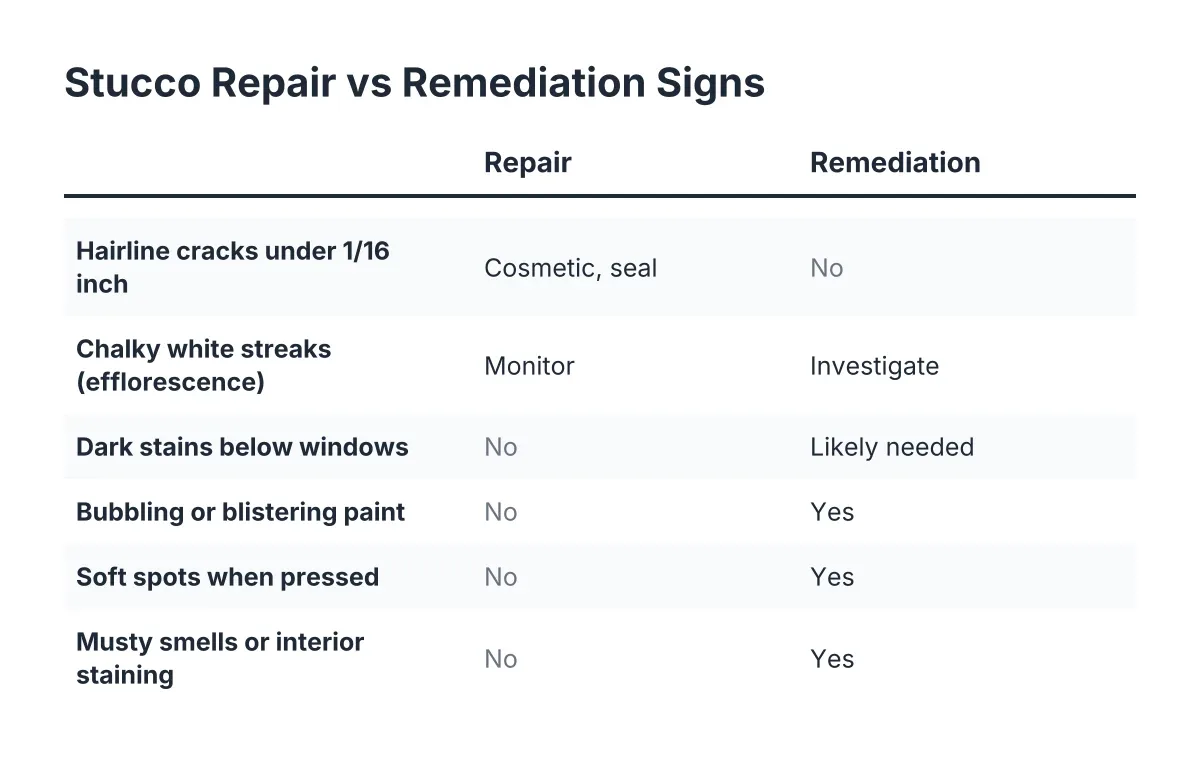
Next, push firmly on the stucco around each marked area with the heel of your hand. Sound stucco feels like concrete. It does not move, flex, or crunch. A soft spot in a stucco wall, one that gives, crackles, or feels spongy, means moisture has gotten behind the finish and started breaking down what is underneath.
Tap the wall too. Solid stucco sounds dull and dense. A hollow sound means the stucco has separated from the layers behind it, which is often a water problem even if the surface looks fine.
Here is why this test matters so much. Stucco is a layered system: the finish, the base coats, a moisture barrier of building paper, and then the wood sheathing and framing. If a structural crack sits open for years, that building paper behind it can get brittle. Then normal wall flexing tears the paper, and water starts reaching the wood directly. At that point you are no longer looking at a stucco problem. You are looking at stucco rot behind the wall, and no surface patch fixes that.
Step 3: Deciding Between DIY and Pro Stucco Solutions
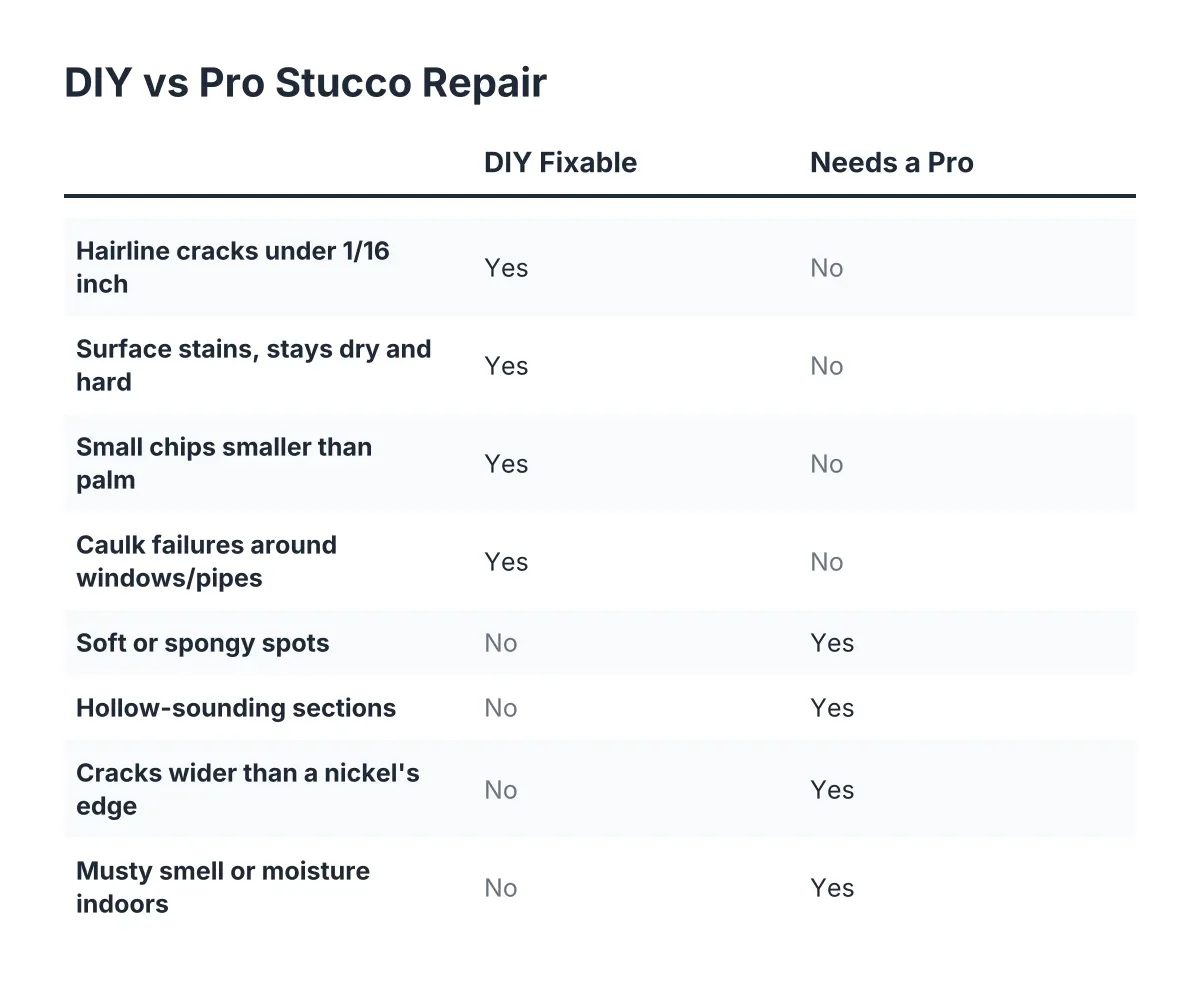
Now sort every taped spot into one of two buckets. Be honest here; this is where landlords and homeowners either save money or waste it. When choosing between DIY and pro stucco approaches, the key is understanding the severity of what you are facing.
What DIY stucco water damage repair can handle
DIY stucco water damage repair is a reasonable choice when the damage is shallow: hairline cracks under about 1/16 inch, surface staining with no softness behind it, and small chips or spalls where the wall underneath is still hard and dry. In these cases the stucco itself is doing its job; only the outer skin needs attention.
Fixable yourself, with basic tools:
- Hairline cracks with no soft or hollow area around them
- Surface stains that stay dry and hard after rain
- Small chips or divots smaller than your palm, with solid material behind them
- Caulk failures around windows, pipes, and fixtures
When water damage in stucco needs a professional
Call a stucco repair pro when the wall itself has failed, not just the surface. That means soft or spongy spots of any size, hollow-sounding sections, bubbling or blistered stucco, cracks wider than a nickel's edge, stains that keep coming back after you seal them, or any musty smell or moisture showing up inside the house near that wall.
Every one of those signs points to water behind the stucco, and the only honest fix starts with opening the wall to see how far it goes. A crew that knows the material will cut back to solid stucco, check the paper and sheathing, and quote from what they actually find. That inspect-first approach protects you from both underpatching and overselling.
Step 4: Do the DIY Fixes Right
If your damage landed in the DIY bucket, do the small repairs promptly and correctly. A cheap fix done well now prevents an expensive one later.
First, remove anything loose. Scrape or chip out flaking, buckling, or crumbling material before you patch. Leaving loose stucco in place lets rain keep working on the wood behind it, and the damage keeps growing under your new patch.
For hairline cracks, use a paintable elastomeric stucco caulk pressed into the crack, then tool it to match the surface as closely as you can. For wider cracks, a backer rod helps; according to Sika, backer rod is a closed-cell foam cord that creates a backing inside the crack before you apply sealant, so the sealant flexes instead of failing. Additionally, for small patches, a premixed product such as Sika stucco patch works for shallow repairs; if your mix gets too dry while you work, add a small amount of water to bring back workability rather than tossing the batch.
When patching a larger vertical area, work from the bottom up. And a warning on cleanup: do not blast the wall with a pressure washer. Because stucco is layered, high-pressure water forced behind the finish can start the exact moisture problem you are trying to prevent.
One trade-off to accept: your DIY patch will probably not match the surrounding texture perfectly. Texture matching is its own skill, and a patch that reads from the street usually means the finish technique was not matched. On a rental, that may not matter. On the front of your home, it might.
Step 5: What a Professional Stucco Repair Should Include
If any spot landed in the pro bucket, here is what a legitimate repair should include, so you can judge the quotes you get. Suppose you own a duplex near Castle Rock and a turnover inspection turns up a soft patch below a bedroom window. A typical crew would cut the stucco back to solid material, inspect the building paper and sheathing, replace any rotted wood, install new paper and lath, then build the stucco back in coats and match the color and texture at the end.
Two things separate a good repair from a cover-up:
- The cause gets fixed, not just the symptom. If a downspout dumps water at the foundation, or an AC unit shakes a corner apart while water pools next to it, patching without fixing drainage means the crack comes back.
- The cutback is honest. On a badly deteriorated corner, the technically correct repair is often removing stucco corner to corner and repatching the full section, not spotting in a small patch. It costs more up front and holds up longer.
A crew that inspects first can also tell you when the full-section repair is overkill. Sometimes a partial patch plus a drainage fix is the right call for the budget, especially on a rental where you need the unit re-listed. The point is that the scope should come from what is behind the wall, not from a sales script.
Step 6: Recheck After the Next Hard Rain
Finally, whether you patched it yourself or had it repaired, check the wall after the next serious storm. Colorado weather does not go easy on exterior walls; the May 2017 Front Range hailstorm alone caused $2.3 billion in insured damage, according to the National Insurance Crime Bureau. Look at your repaired spots, press-test them again, and confirm no new stains appear.
Stucco water damage caught at the stain stage is a small, cheap fix. Caught at the soft-spot stage, it is a moderate repair. Ignored until the sheathing rots, it becomes a remediation project. The whole game, for a Castle Rock homeowner staring at a crack or a landlord working a vacancy window, is catching it at the earliest stage and matching the fix to the actual damage. Handle the surface stuff yourself, and get a local crew to open the wall when the wall tells you to.
If you need stucco repair, Castle Rock Stucco Pros can help.
Prefer to talk it through? Call (720) 797-8506 — a quick call is usually the fastest way to get a straight answer for your situation.