
Stucco Water Damage — Complete Guide
Water that gets behind stucco rarely announces itself right away. Instead, it shows up months later as a stain that will not dry, a soft spot that gives under your thumb, or a bubbled patch near a window. This guide covers how stucco water damage starts, how to tell a cosmetic blemish from hidden rot, and what separates a simple patch from a job that means opening the wall. Because you probably found this page after spotting something on your own house, every section focuses on what to check, what it means, and what drives the cost of fixing it. By the end, you will know what questions to ask before anyone quotes you a scope of work.
What You'll Find in This Guide
- Cost to Repair Water Damage in Stucco: What Drives the Price Up or Down
- 7 Signs of Water Damage in Stucco: Cracks, Stains, and Soft Spots Explained
- Stucco Water Damage Repair in Castle Rock, CO
- How Much Does Stucco Water Damage Cost?
- Stucco Water Damage vs. Other Exterior Damage: What's Urgent Before You List
- Stucco Water Damage Terms Explained: A Plain-English Glossary
- How Water Penetrates Stucco, Causes Rot, and What Repair Really Takes
- DIY Stucco Water Damage Repair vs. Calling a Pro: How to Decide
Prefer to have a pro handle it? Stucco water damage repair is one call away.
How Water Gets Behind Stucco and Why the Damage Hides
Stucco itself handles weather well. The trouble starts at the seams: cracks in the finish coat, failed caulk around windows, flashing that was never installed right, or a clogged weep screed at the base of the wall. Water follows these openings, slips behind the stucco, and sits against the paper and sheathing where it cannot evaporate. Over time, that trapped moisture softens wood, corrodes fasteners, and feeds rot you cannot see from the outside.
Colorado weather makes this worse. Hail bruises and cracks stucco finishes along the Front Range nearly every year, and a single storm can do enormous damage. For example, the May 2017 Front Range hailstorm caused $2.3 billion in insured damage, the costliest catastrophe in state history, according to the National Insurance Crime Bureau. After a storm like that, hairline impact cracks become entry points. Then freeze-thaw cycles pry those cracks wider each winter, and spring moisture finds its way in.
The Warning Signs Worth Pressing On
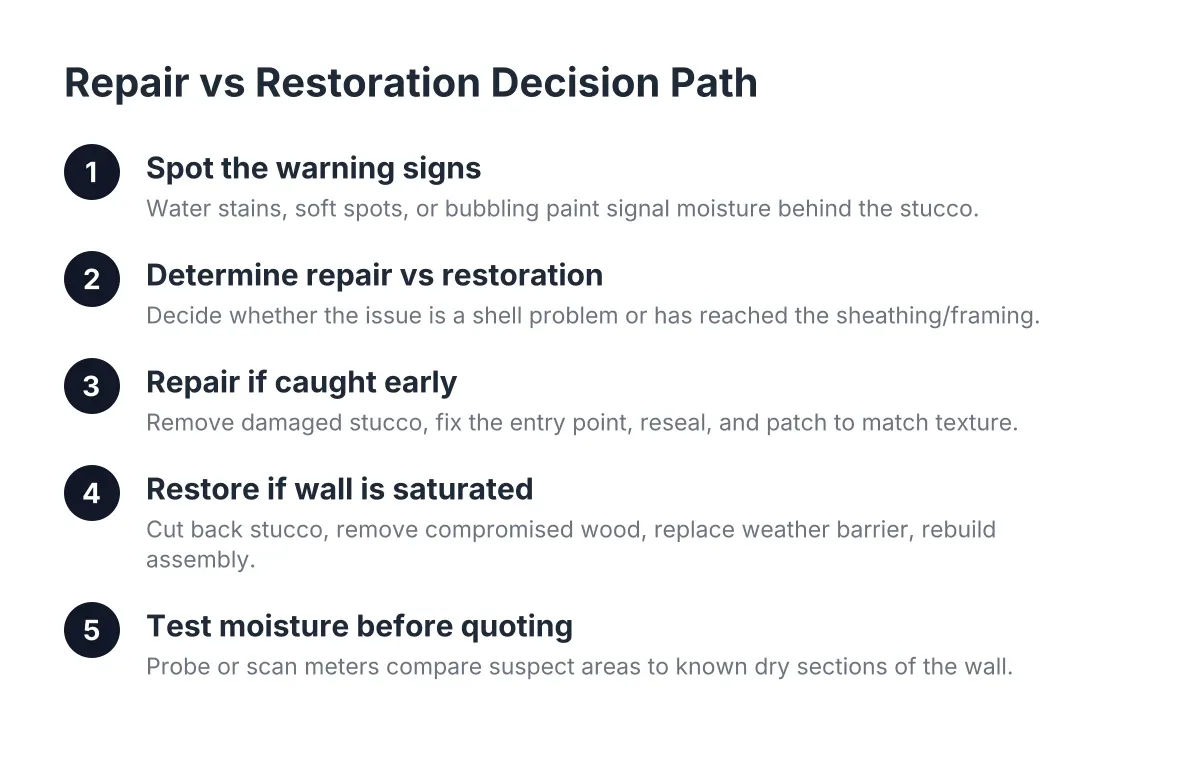
So what should you actually look for? Start with stains that return after the wall dries, especially below windows and near rooflines. Next, press gently on any discolored area. A soft spot in a stucco wall means the material behind it has lost its backing, and that almost always points to moisture. Additionally, tap the wall with a knuckle. A hollow sound where the rest of the wall sounds solid suggests the stucco has separated from its substrate. Bubbling or peeling paint on stucco tells a similar story, because trapped moisture pushes outward as it tries to escape.
For a full walkthrough of what each symptom means, the guide to the seven signs of water damage in stucco covers each one with context. And if you want to understand the mechanics underneath, the article on how water penetrates stucco and causes rot traces the path water takes from the first crack to structural damage. The short version: surface symptoms are the end of the story, not the beginning. The real question is always what the wall looks like behind the finish.
Cosmetic Fix or Open the Wall: Repair vs. Remediation
This is the question that matters most, because it determines everything about scope and cost. A repair addresses the stucco itself. Think crack filling, patching a damaged section, and blending the new texture into the old. Remediation goes further. It means removing stucco down to the sheathing, replacing rotted wood and failed moisture barriers, correcting the flashing or drainage problem that let water in, and then rebuilding the wall assembly from the inside out.
Here is the honest part: you usually cannot tell which one you need by looking at the surface. A small stain can sit on top of a large rot problem, and a dramatic-looking crack can be purely cosmetic. That said, a few patterns help. Damage concentrated around windows and doors often traces back to flashing, which leans toward remediation. Meanwhile, isolated impact damage or hairline shrinkage cracks with no staining usually stay on the repair side.
What a Real Inspection Should Include
Because the surface hides so much, any serious assessment starts with moisture testing. A contractor should check moisture readings in suspect areas, probe soft spots, and look at the details where water typically enters: window sills, roof-to-wall transitions, and the base of the wall. If someone quotes you a full scope without doing any of that, treat the number with caution. The right order is inspect first, then quote.
Moisture control is also a documented building science problem, not just a contractor talking point. The EPA's guidance on moisture control explains why trapped water in wall assemblies leads to decay and indoor air problems over time.
You will also run into jargon during this process. Terms like weep screed, lath, and efflorescence show up on quotes constantly, and the plain-English stucco water damage glossary translates them so you can compare scopes line by line. Finally, if the damage looks small, the guide on DIY repair versus calling a pro helps you decide which fixes are genuinely homeowner-friendly and which ones risk sealing moisture inside the wall.
What Stucco Water Damage Repair Costs Depend On
Nobody can give you an honest number without seeing the wall, and you should be skeptical of anyone who tries. However, the variables that drive the price are predictable, and knowing them helps you read quotes intelligently.
The biggest driver is how far the water traveled. A contained patch where moisture stayed in the stucco layer costs far less to fix than a wall where water reached the sheathing and framing. As a result, the second driver follows directly: how much of the wall has to come off to reach sound material. Beyond that, the condition of what is underneath matters. Replacing a section of rotted sheathing adds labor and material, and framing repairs add more. Access plays a role too, since second-story work and tight lot lines slow everything down. Finally, finishing work affects the total. Matching your home's existing color and texture takes skill and time, but it is the difference between a repair that disappears and a patch you notice from the street.
Two articles here go deep on the money question. The breakdown of cost factors for water-damaged stucco explains each variable in detail, while the stucco water damage cost guide focuses on the three questions that shape every quote.
If You Are Selling or Planning Ahead
Timing changes the calculus. For instance, if you are preparing to list your home, visible stucco damage raises buyer questions and inspection flags, so sorting urgent repairs from cosmetic ones matters more than usual. The guide on stucco damage priorities before listing walks through that triage.
Insurance is worth a thought as well. Colorado homeowners have watched premiums climb sharply, with rates up 57.9% from 2018 to 2023 according to the Rocky Mountain Insurance Information Association, driven partly by catastrophic hail losses. With this in mind, documenting storm damage promptly and keeping repair records can matter when claims or renewals come up. For the specifics of what a water damage repair involves from first inspection to final texture match, the overview of stucco water damage repair in Castle Rock lays out the process step by step.
Ready to Get Started?
We repair stucco water damage for homeowners in Castle Rock and nearby areas, from soft spots and stains to walls that need opening and rebuilding, with the finish matched to your home's existing color and texture. We inspect the wall before we quote the work, so the scope reflects what is actually behind your stucco. Call us or send a request, and tell us what you are seeing on your wall.